

Why Your Wedding Suit Should Be Custom — And What to Tell Your Tailor
The Cerroni Journal · Wedding Edition
A wedding is not an ordinary day. It is, for most men, the single occasion in their lives when every detail of their appearance will be photographed, remembered, and looked back upon for decades. The suit worn on that day will exist in those photographs long after the day itself has passed — present in the background of every table shot, central in every portrait, and permanent in the memory of everyone who was there.
Given all of this, it is remarkable how many grooms approach the question of the wedding suit as though it were simply a more formal version of any other suit purchase. It is not. A wedding suit is a singular commission, and it deserves to be treated as one.
At Cerroni, we have had the privilege of clothing grooms for some of the most significant days of their lives. What follows is everything we have learned about why custom is the right choice for a wedding, and how to make the most of the process from the very first conversation with your tailor.
Why a Wedding Is the Strongest Case for Custom
Every argument in favour of a custom suit applies with particular force to a wedding.
The photographs will last a lifetime. An off-the-rack suit that fits almost correctly will look almost correct in every photograph taken on the day — and almost correct is not good enough for images that will hang on walls and sit in albums for the next fifty years. A suit made specifically for your body, in a cloth chosen for how it photographs, will look exactly right. Not approximately. Exactly.
The day is long. A wedding day typically runs from early morning preparations through to late evening celebrations — twelve hours or more of wearing the same suit, moving through ceremonies, photographs, receptions, and dancing. A suit that fits correctly and is built on a floating canvas will remain comfortable and composed throughout. A suit that fights the body, even slightly, will become progressively more uncomfortable and more dishevelled as the day wears on.
You will wear it again. A well-chosen, well-made wedding suit — particularly one in a versatile colour and cloth — is not a single-occasion garment. It can and should be worn again: to significant dinners, to formal occasions, to any event that calls for something beyond the everyday. A bespoke suit earns its investment across every wearing, not just the first.
It is a mark of the occasion. There is something fitting — in every sense — about marking the most significant day of your life with something made specifically for it. A custom suit is not merely clothing. It is a deliberate act of preparation, a statement that this day mattered enough to do things properly.
When to Begin
The single most important practical advice for a groom commissioning a wedding suit is this: begin earlier than you think you need to.
A fully bespoke suit requires a minimum of eight to twelve weeks from first consultation to final delivery, and that timeline assumes no complications — no significant weight changes, no fabric delays, no scheduling difficulties across multiple fittings. For a wedding, where the stakes of a delay are considerable, we recommend beginning the commission at least four to six months before the date.
This extended lead time serves several purposes beyond simply ensuring the suit is ready. It allows you to attend fittings without urgency, to consider details at leisure rather than under pressure, and to make changes — to the cloth, to the design, to the fit — without those changes becoming crises. It also allows time for the canvas to begin settling before the wedding day itself, so the suit has been worn and feels familiar rather than brand new.
If you are commissioning suits for groomsmen as well, begin even earlier. Coordinating multiple fittings across multiple schedules requires more time than most grooms anticipate.
What to Bring to Your First Consultation
The first consultation with your tailor is the most important meeting of the entire commission. It is the moment when the suit begins to take shape — not on a body, but in a conversation. The more information you bring to that conversation, the more precisely the result can be calibrated to the day.
The venue and its character. A ceremony in a sandstone church followed by a reception in a formal ballroom calls for a different suit than a garden ceremony followed by an outdoor dinner. The formality of the venue, its architectural character, its light — all of these inform the cloth, the colour, and the construction of the suit. Bring photographs if you have them.
The time of day. Morning weddings and afternoon weddings favour lighter cloths and lighter colours — a fine wool fresco, a mid-grey or a warm navy, a slightly softer silhouette. Evening weddings, particularly those with candlelight or artificial lighting, call for cloths with a subtle lustre and colours that deepen beautifully in low light. Your tailor will understand these distinctions; give them the information to apply that understanding.
The season. A summer wedding in full sun requires a cloth that breathes — a fresco, a hopsack, or a lightweight tropical worsted. A winter wedding calls for a cloth with more body — a fine flannel, a medium-weight worsted — that will keep you comfortable through the outdoor moments and photograph with a satisfying weight. The season shapes the cloth recommendation more than almost any other factor.
The dress code. If the wedding has a stated dress code — black tie, morning dress, lounge suit — your tailor needs to know. If it does not, consider what level of formality the occasion warrants and communicate that clearly. A destination beach wedding and a formal cathedral ceremony require very different answers to the question of what to wear.
The bridal palette. The groom's suit does not need to match the bridal party — and in most cases, it should not match too closely. But it should exist in conversation with the colours around it. Bring the colour palette of the wedding: the florals, the bridal party, the table settings if you know them. Your tailor can ensure that the suit sits harmoniously within that palette rather than clashing with it or disappearing into it.
Your personal references. Bring images of suits you admire — from editorial photographs, from films, from real weddings you have attended. These references are not a brief to copy but a language to share. They communicate your instincts about silhouette, lapel shape, colour, and formality far more efficiently than words alone. Your tailor will read them for what they reveal about your taste rather than treating them as prescriptions.
The Design Decisions That Matter Most for a Wedding
A wedding suit involves all the usual design decisions of any custom commission, but some carry more weight in this particular context.
Colour. The colour of a wedding suit is its most visible and most lasting statement. Midnight navy photographs exceptionally well in almost every light condition — it reads as formal without being severe, and it deepens beautifully in evening light. Charcoal grey is similarly versatile and particularly flattering in cooler seasons. Lighter options — dove grey, champagne, ivory — suit outdoor and summer weddings and communicate a particular ease and romance. Bring your instincts to the conversation, but allow your tailor to consider how the colour will behave in the specific light conditions of your venue and season.
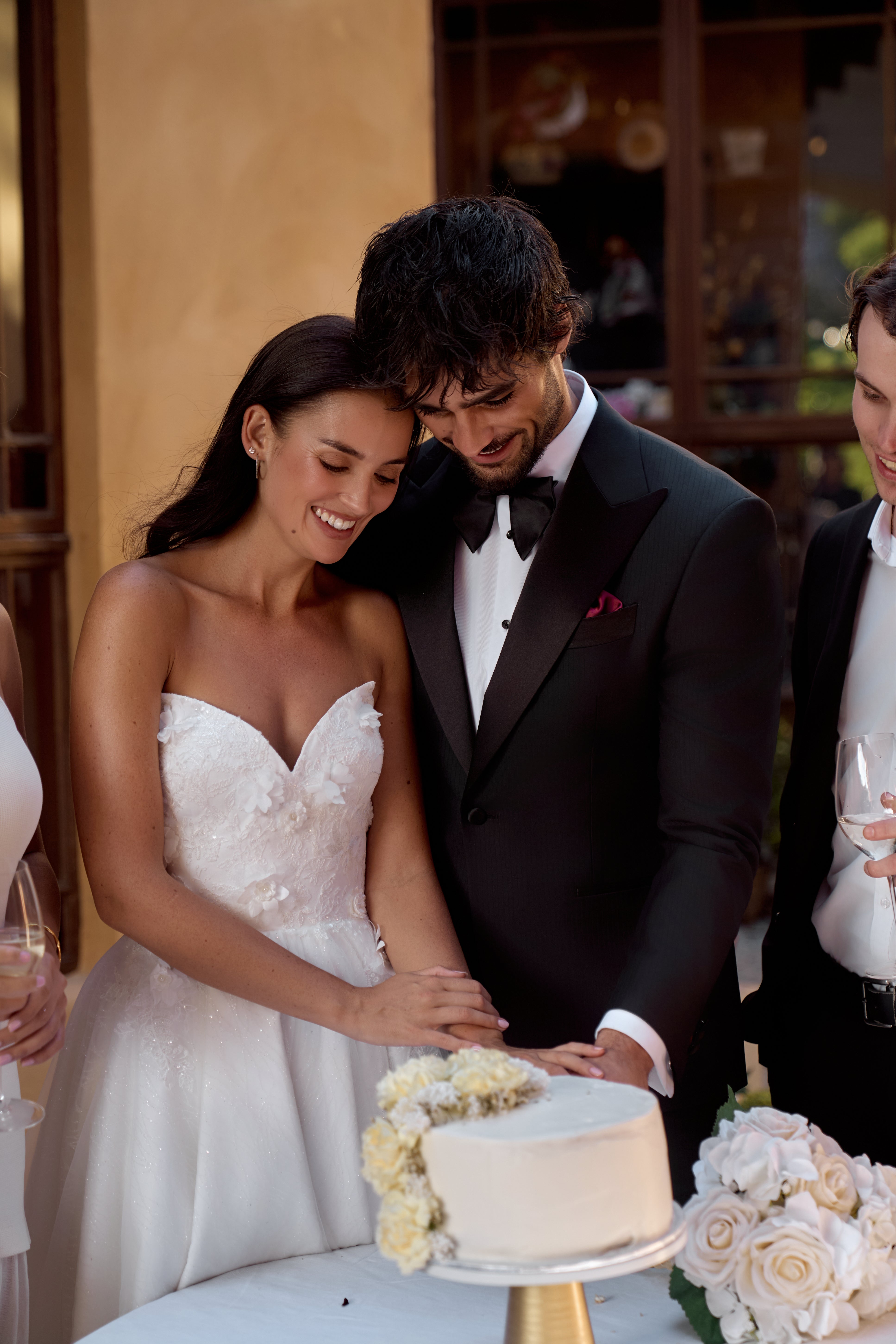
Lapel. The lapel sets the register of the suit. A notch lapel is clean and modern, appropriate for a lounge suit wedding. A peak lapel elevates the formality and carries strong associations with classic tailoring — appropriate for a more formal occasion or for a groom who wants his suit to read as distinctly ceremonial. A shawl lapel belongs to black tie. Know the formality of your wedding and choose accordingly.
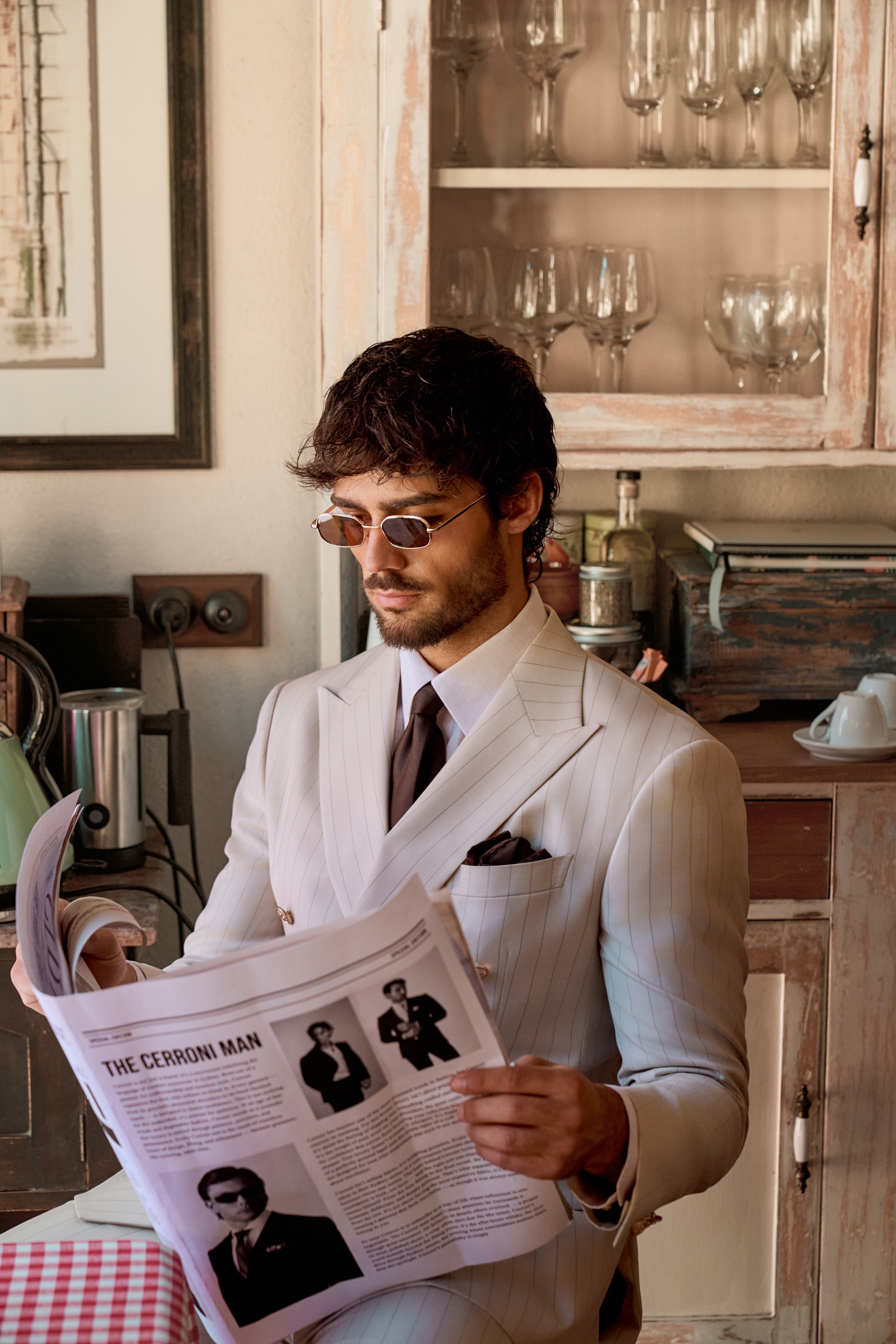
Single or double breasted. Single breasted remains the most versatile and most widely flattering choice. Double breasted suits communicate a particular confidence and authority, and are experiencing a considered revival in formal contexts — but they require a certain build and a certain ease of wearing to look entirely natural. Discuss this with your tailor honestly; they will advise you well.
The trouser. Wedding photographs are not only of the jacket. The trouser — its rise, its break at the shoe, the width of the leg — contributes significantly to the overall proportion of the suit in images. A slightly higher rise and a cleaner break at the shoe tend to photograph particularly well and feel more formal. Consider this in consultation with your tailor rather than leaving the trouser as an afterthought.
A personal detail. A wedding suit is an appropriate place for one considered personal detail — an embroidered date inside the jacket, a particular lining fabric, a buttonhole flower worked in silk. These details are not ostentation; they are acknowledgement that this garment marks something. Discuss with your tailor what might be possible and appropriate.
What the Suit Communicates Before You Say a Word
There is a dimension to the wedding suit that goes beyond the practical and the aesthetic. A well-made suit worn with ease communicates something about the man wearing it — about his attention to the occasion, his respect for the people gathered, his relationship with his own presentation.
A groom who is comfortable in his suit carries himself differently. He does not pull at the jacket or check the mirror anxiously. He is not distracted by a shoulder that sits wrong or a collar that has lifted away from his shirt. He is simply present — in his body, in the room, in the day.
This is what a suit made correctly allows. Not performance, not display — presence. The suit recedes, and the man wearing it comes forward. That is, in the end, precisely what clothing is supposed to do.
Cerroni Atelier — Wedding Commission Checklist
— Begin the commission at least four to six months before the wedding date.
— Bring venue photographs, the season, the time of day, and the dress code to the first consultation.
— Share the bridal colour palette so the suit can be considered within the full visual context of the day.
— Bring reference images — editorial, film, real weddings — to communicate instinct and taste.
— Give particular attention to the trouser; it appears in photographs as much as the jacket does.
— Consider one personal detail — a monogram, a lining, a date — to mark the suit as singular.
— Wear the finished suit at least once before the wedding day so it settles and feels familiar.
— Discuss aftercare with your tailor so the suit is preserved for many future wearings.
The wedding suit is not simply what you wear on the day. It is what remains of the day — in the photographs, in the memory, and in the wardrobe where it will hang and be worn again for years to come. It deserves the same care and consideration that you bring to every other decision about the occasion.
At Cerroni, we would be honoured to be part of that preparation. The conversation begins with a single appointment.

Leave a comment
This site is protected by hCaptcha and the hCaptcha Privacy Policy and Terms of Service apply.